What Optics Do You Actually Need? The Australian Hunter's Starter Guide
The short answer
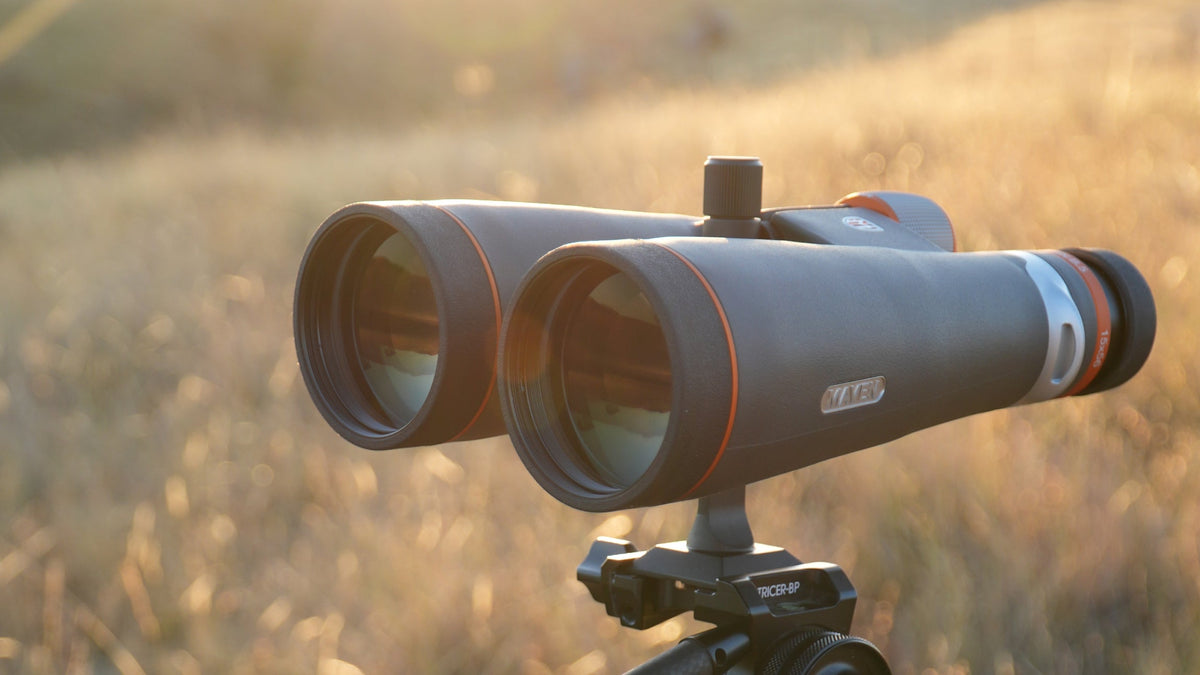
Buy binoculars first, and buy better ones than you think you need. Add a rangefinder second, once you're taking shots past 200m. Add a spotting scope last, and only if you hunt open or alpine country where you're assessing animals at long distance.
Most hunters get this order backwards, spending heavily on a rifle scope and treating binoculars as an afterthought. You will look through your binoculars a hundred times more often than you look through anything else.
Why binoculars come first
The rifle scope is for the last few seconds of a hunt. The binoculars are for all the hours before it.
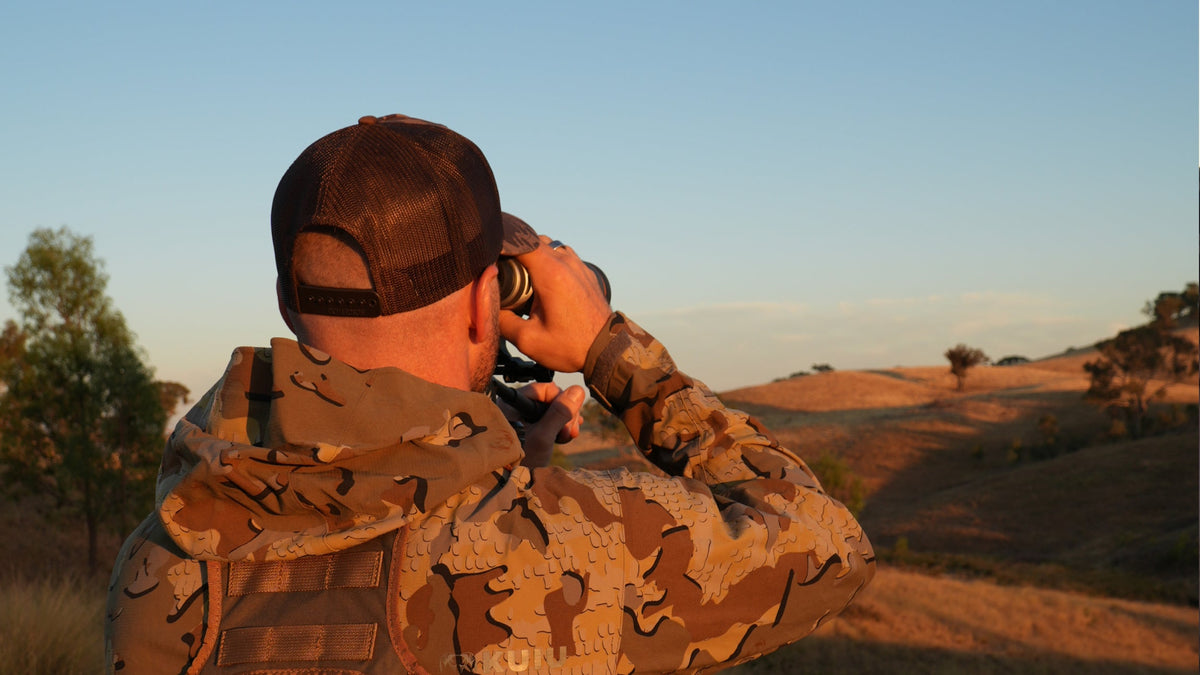
On a typical day you might raise your rifle once, or not at all. You'll raise your binoculars constantly: checking movement on a far face, working out whether that shape in the scrub is a deer or a stump, judging whether an animal is worth the stalk. Every one of those decisions is made through glass, and cheap glass makes them badly.
The specific failure of cheap binoculars isn't that the image looks worse in the shop. It's that they fail in exactly the conditions that matter. First and last light, when animals move, is when poor coatings and poor prisms give up. A $200 pair and a $2,000 pair look similar at midday. At 6am they are not remotely the same instrument.
The realistic buying order
1. Binoculars. Used constantly, in the worst light, for the decisions that matter. Spend here.
2. A rangefinder, once you're shooting past 200m. Below that, most hunters estimate well enough. Past it, estimation errors of 50 to 100m are normal even for experienced shooters, and at 400m that's the difference between a clean kill and a wounded animal. This is an ethics purchase as much as an accuracy one.
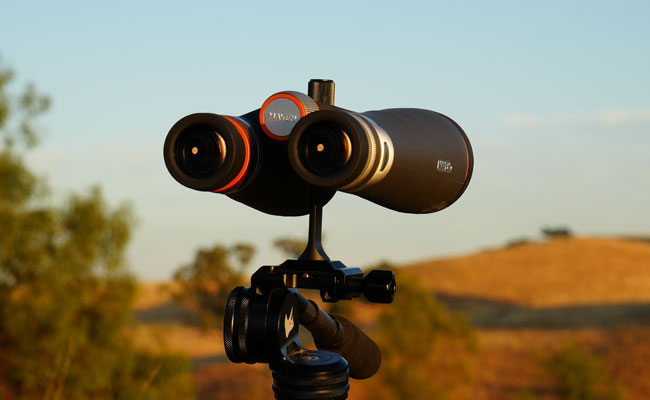
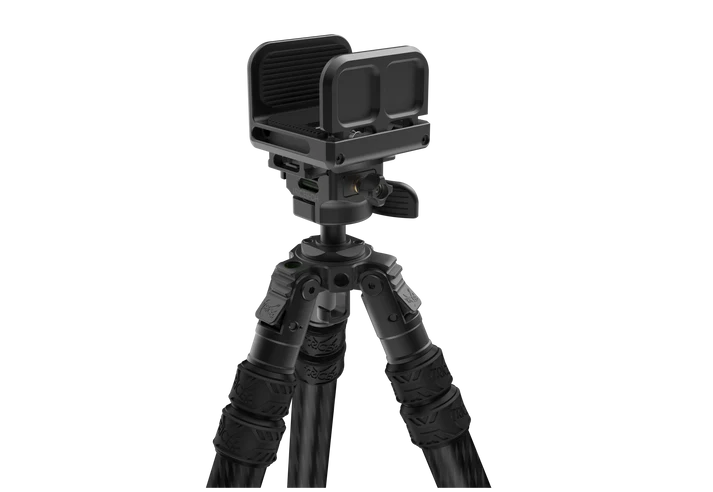
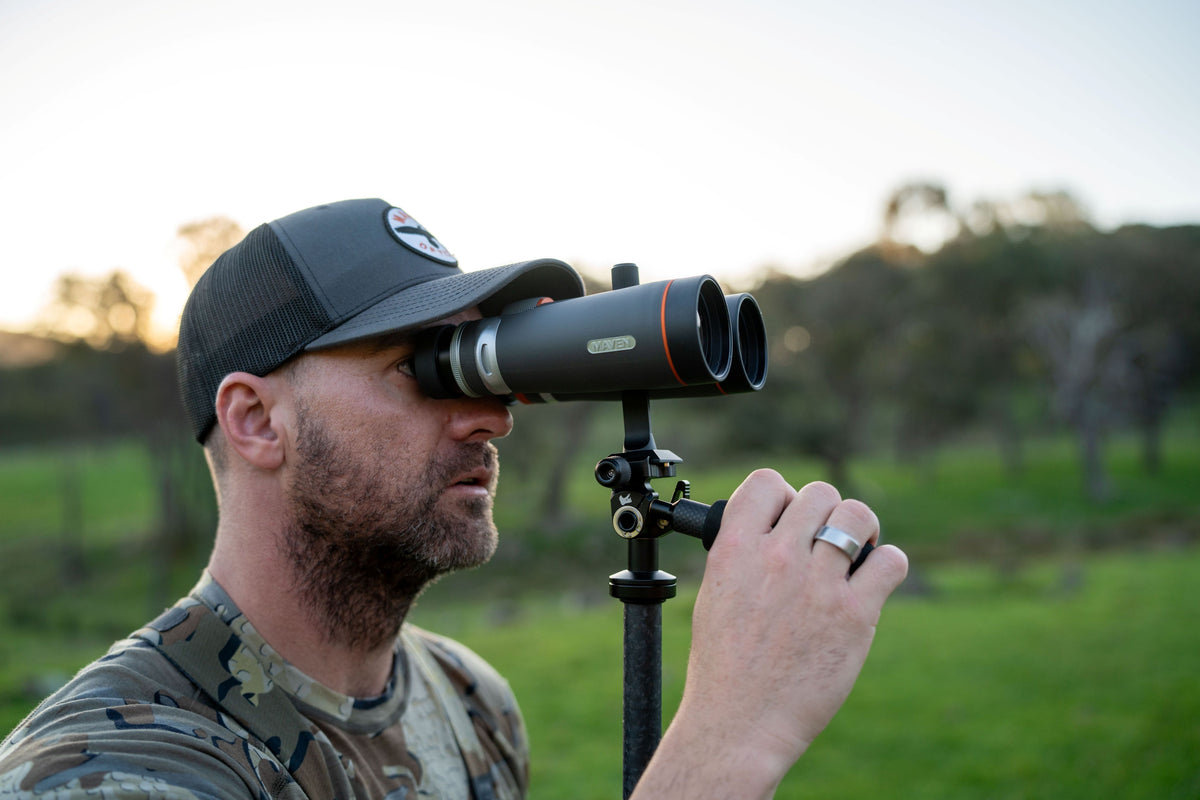
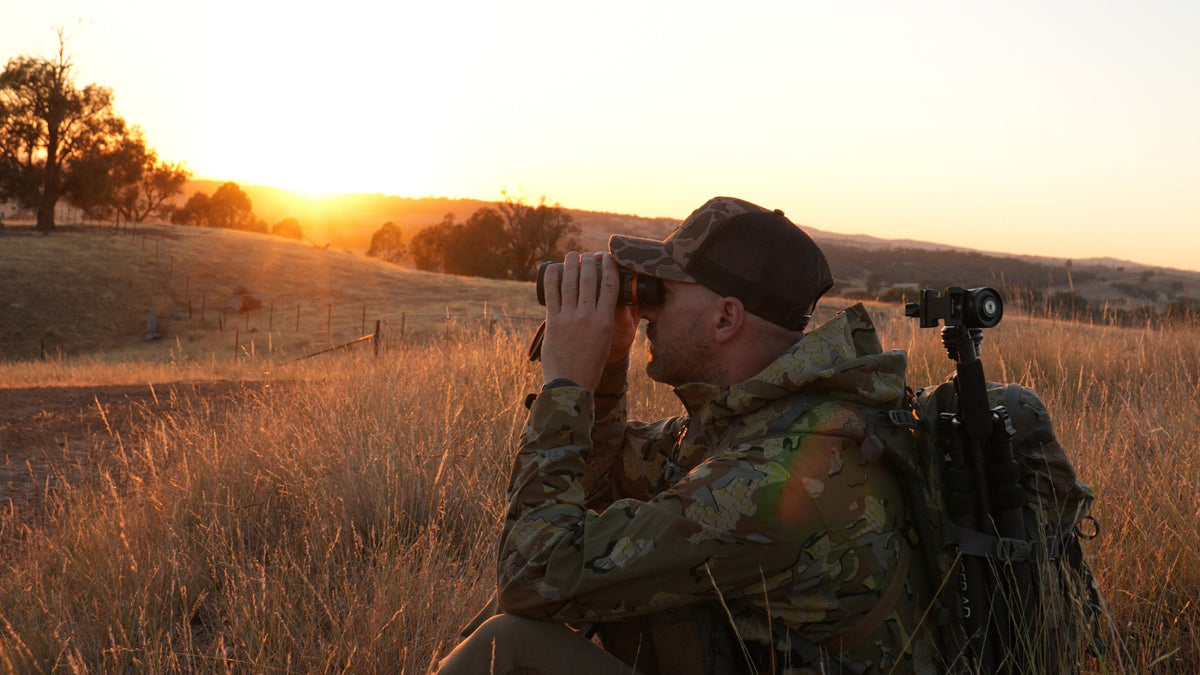
3. A tripod, if you glass seriously. Cheaper than most people expect and it transforms what your existing binoculars can do. Handheld, you scan. On a tripod, you actually look. Hunters routinely find animals in country they'd already "glassed" once they put the same binoculars on legs.
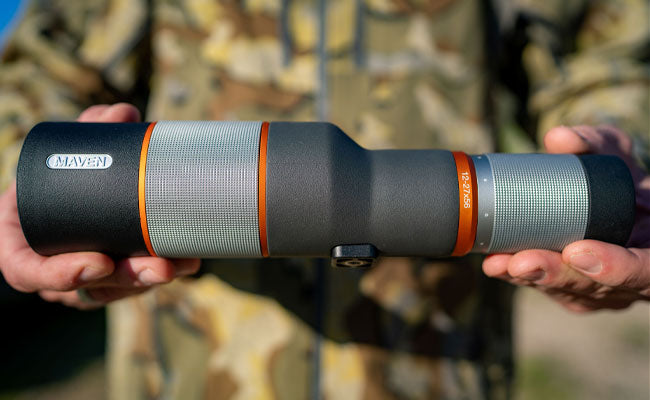
4. A spotting scope, last. It does one job binoculars can't: assessing an animal in detail at distance, working out whether a stag is worth a four hour climb. If you hunt open or alpine country, it saves entire days of walking. If you hunt timber under 200m, you may never need one.
5. Thermal, if and when it fits your hunting. Genuinely transformative for pigs, foxes and night work. Irrelevant for a lot of daylight deer hunting. Not a beginner purchase.
Budget tiers, honestly
Prices in AUD, for what you actually get rather than what a spec sheet claims.
Entry, roughly $400 to $900
You can get usable binoculars in this range. What you're giving up is low-light performance, edge-to-edge sharpness, and long-term durability. Coatings are simpler, prisms are less well corrected, and the image softens noticeably away from the centre.
This is the right tier if you hunt occasionally, in reasonable light, and aren't sure yet how much hunting you'll do. It's the wrong tier if you're already committed, because most people at this level buy again within three years.
Maven's C series starts around here and represents the honest ceiling of what this money buys.
Mid, roughly $1,000 to $1,600
The biggest jump in real-world performance per dollar. You get genuinely good glass, proper coatings, and reliable low-light behaviour. For most hunters, this tier is enough forever.
Maven's C.3 and C.4 sit here, as do the higher-spec compact options.
Premium, roughly $1,800 to $2,600
Flagship glass. Sharper edges, better contrast in flat light, more forgiving eye placement, and the build to survive a decade of being dropped on rock. The improvement over the mid tier is real but not proportional to the price, which is the honest thing to say about every premium optic ever made.
The Maven B series lives here. The B1.2 at $1,999 is where most serious hunters land.
Above $3,000
European alpine glass, mostly. Genuinely excellent, genuinely more than most hunters need, and a significant part of the price is brand and retail chain rather than performance. Worth it if you glass professionally or for many hours a day. Otherwise you're paying a premium for the last few percent.
A simple decision framework
Work through these three:
How do you hunt? Walking and stalking in timber favours light, wide, forgiving optics. Sitting and glassing open country favours magnification and a tripod.
What's your realistic maximum range? Under 200m, skip the rangefinder for now. Past 300m, it's not optional.
How many days a year? Under ten days, the mid tier is genuinely sufficient. Over thirty, buy the best binoculars you can justify once rather than twice.
The decision tree
Three inputs, one recommendation. Find your row.
| Your hunting | Realistic max range | Budget | Buy this first |
|---|---|---|---|
| Timber and scrub, walking | Under 150m | Entry | 8x42 in the C series. Skip the rangefinder for now. |
| Timber and scrub, walking | Under 150m | Mid to premium | 8x42 B1.2. It will outlast the hunting. |
| Mixed country, some open | 150-300m | Entry to mid | 10x42 C series, add a tripod before you add anything else. |
| Mixed country, some open | 150-300m | Premium | 10x42 B1.2 plus a Tricer tripod and pan head. |
| Open or alpine, sitting and glassing | 300m+ | Mid | 10x42 C series, tripod, rangefinder. Three items, in that order. |
| Open or alpine, sitting and glassing | 300m+ | Premium | 10x42 B1.2, Tricer-AD with pan head, Maven RF. Add a spotting scope in year two. |
| Night work, pigs and foxes | Any | Any | Different conversation entirely. Thermal, not conventional glass. Call first. |
The pattern worth noticing: at every budget level, the recommendation is better binoculars and a tripod before more items. Two good things beat four compromised ones.
A sensible starter kit
For a hunter getting properly set up in Australian or NZ conditions:
- Binoculars: Maven C.1 or B1.2 depending on budget. 10x42 for open country, 8x42 for timber.
- Tripod and head: a Tricer setup. Adds capability to whatever binoculars you already own.
- Rangefinder: Maven RF series, once you're shooting past 200m.
- Spotting scope: later, and only if your country calls for it.
Everything Maven comes direct through us as the exclusive Australia and New Zealand distributor, with the unconditional lifetime warranty handled locally rather than through an overseas queue.
Not sure where to start? Call Josh on 0404 372 653. Tell him what you hunt and where, and he'll tell you honestly what you need and, more usefully, what you don't.