8x42 vs 10x42 Hunting Binoculars, Which Should You Buy?
The short answer
For Australian and New Zealand hunting, 10x42 is the more useful choice more often than the standard advice suggests. 8x42 gives a wider, steadier image and holds up better in thick timber and failing light. 10x42 gives roughly 25% more reach for the same objective lens size, which matters across most of the country people here actually hunt.
If you hunt mostly scrub and timber, take the 8x42. For everything else, the 10x42 earns its place.
Why the standard advice says 8x42, and why it's incomplete
Search this question anywhere and you'll get the same answer: 8x42 is the all-rounder, 10x42 is for specialists. That advice isn't wrong, it's just written for a different continent. It comes largely from North American whitetail hunting, much of it done from stands at moderate range in wooded country, where a wide, forgiving field of view is worth more than reach.
Our own sales tell a different story. 10x42 outsells 8x42 here, consistently. That's not a marketing preference, it's what hunters buying their second or third pair come back for. Once you've spent a season glassing across a valley in the Victorian Alps, or picking apart a tussock face in the South Island, the extra magnification stops being a specialist's luxury.
The actual differences
| 8x42 | 10x42 | |
|---|---|---|
| Magnification | 8x | 10x, about 25% more reach |
| Field of view | Wider, easier to find and track animals | Narrower, more scanning to cover the same ground |
| Hand shake | Noticeably more forgiving | Visible above 10x without support |
| Exit pupil | 5.25mm, better in low light | 4.2mm, dimmer at dawn and dusk |
| Best for | Timber, scrub, close-to-mid range, walking and glassing | Open country, alpine faces, extended sit-down glassing |
Two of those matter more than the rest.
Exit pupil is objective diameter divided by magnification. At 42mm, an 8x gives you 5.25mm and a 10x gives you 4.2mm. Your pupil dilates to somewhere between 5mm and 7mm in low light depending on age, so the 8x42 genuinely delivers a brighter image in the last twenty minutes of shooting light. This is real, and it's the strongest argument for the 8x.
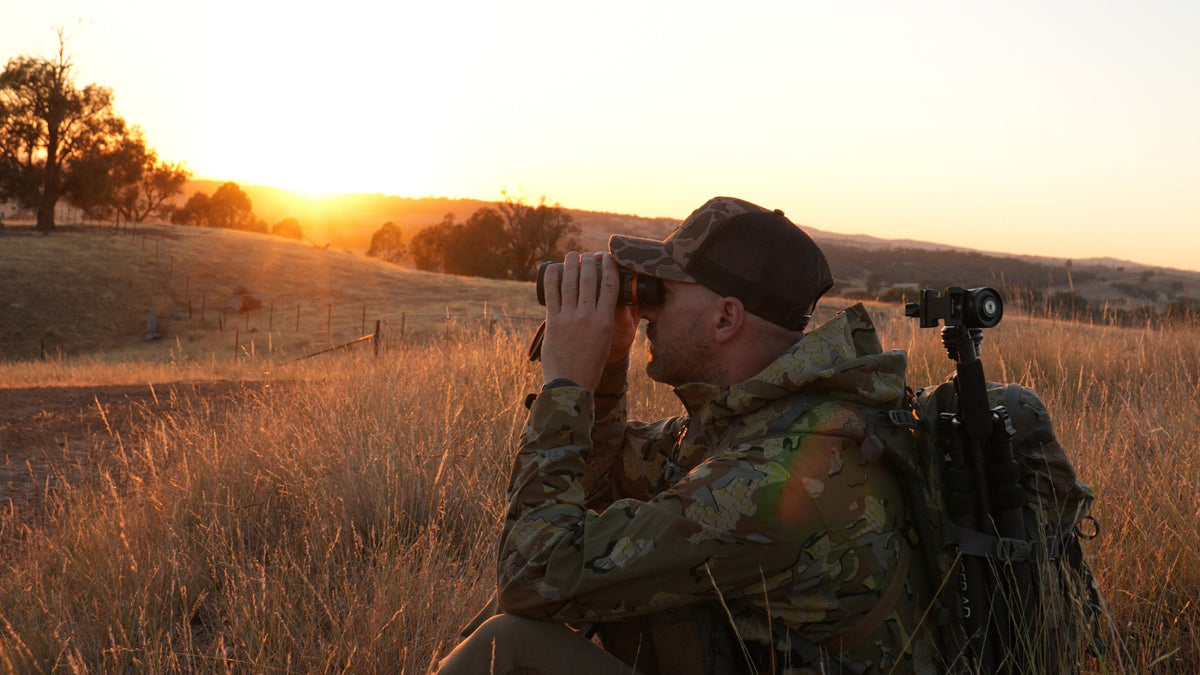
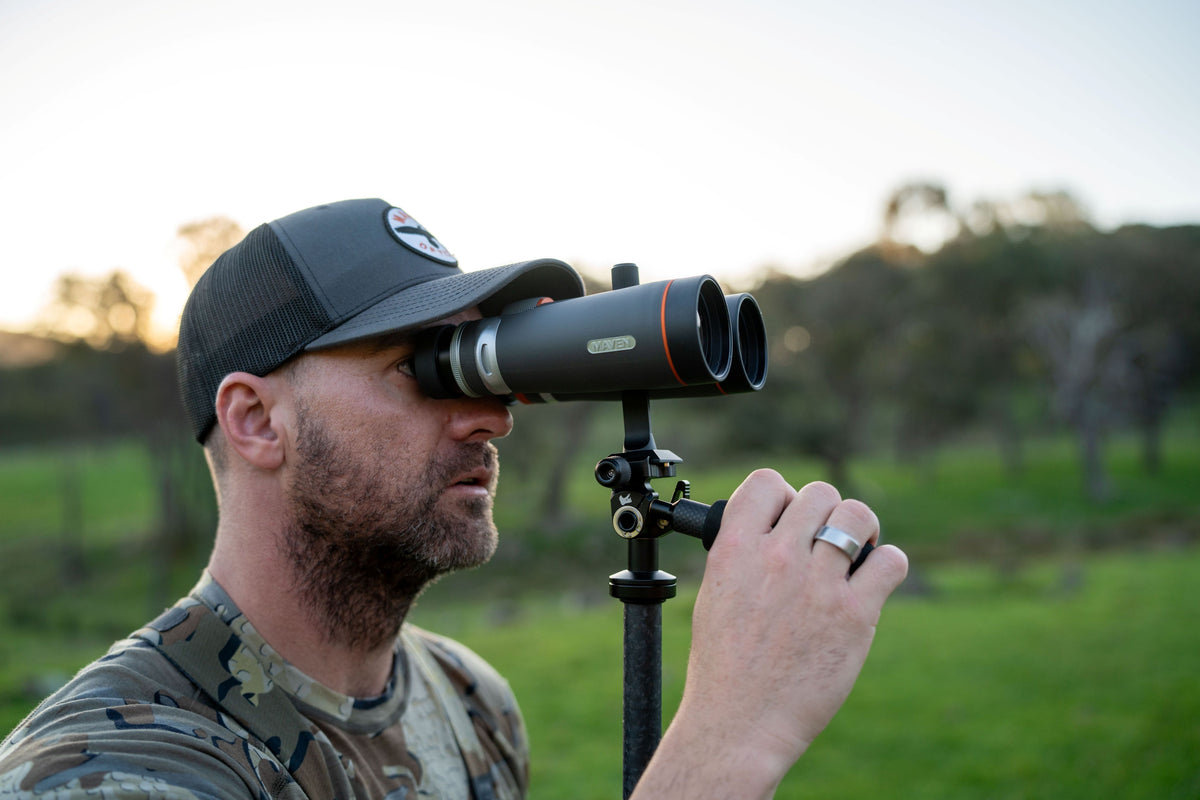
Hand shake is the other one. At 10x, the wobble in your hands is magnified along with the animal. Most people can hold a 10x steady enough for a quick look, but not for a twenty minute glassing session. Which leads to the thing most comparisons leave out.
The part most comparisons miss: a tripod changes the answer
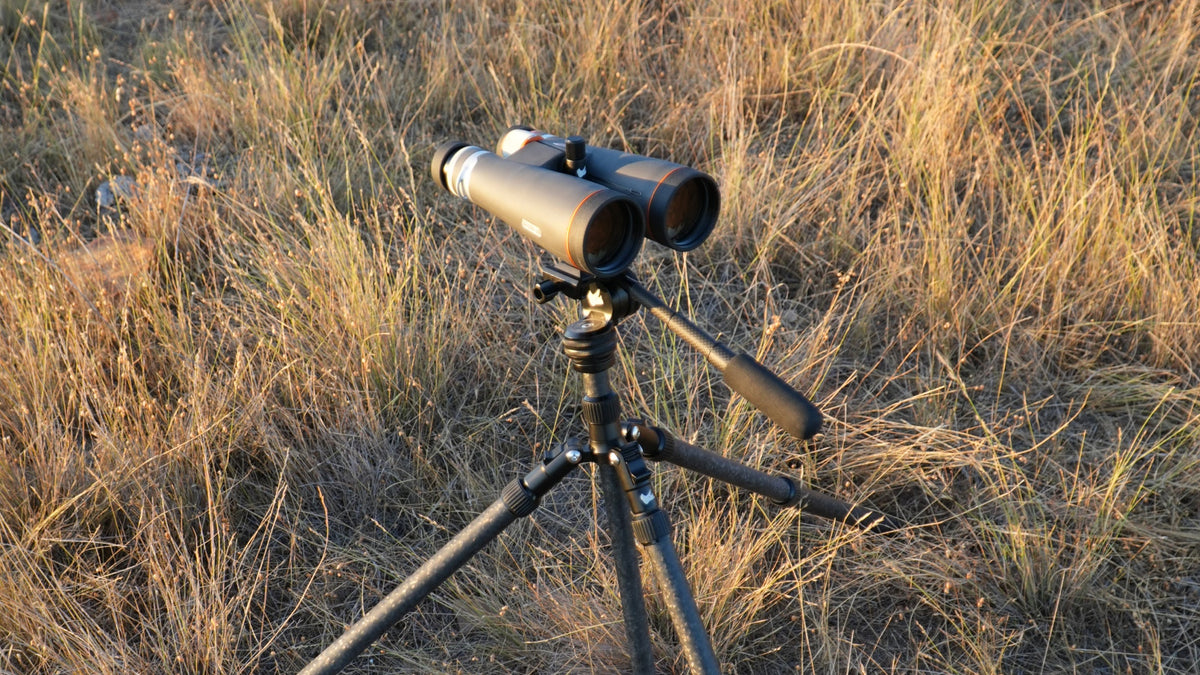
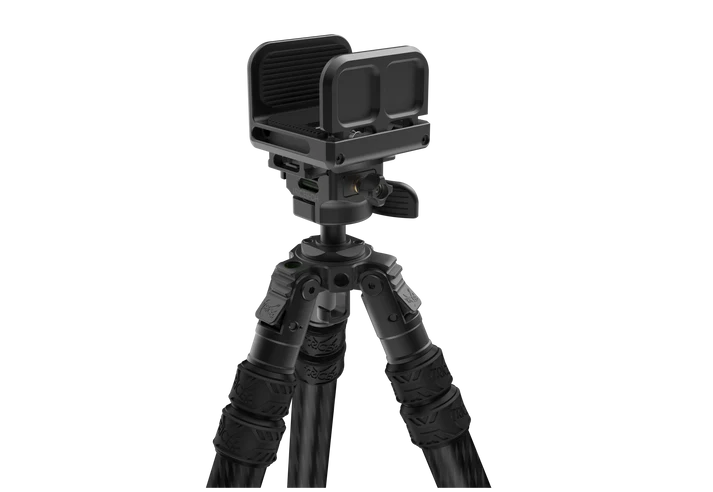
The case against 10x42 is mostly a case about hand shake. Put the binoculars on a tripod and that argument disappears entirely, while the extra reach stays.
If you're glassing seriously, sitting on a face for half an hour picking apart shadow and scrub, you should be on a tripod regardless of magnification. Once you are, 10x42 is simply more capable than 8x42 at the same weight and the same objective size. The people who tell you 10x is too shaky are almost always talking about handheld use.
That's the real decision framework. Not "which magnification", but "how do you glass".
Which wins in Australian and NZ terrain
Dense timber and scrub, sambar country in the Victorian high country, thick coastal bush: 8x42. You're picking movement out of shadow at short range, often handheld, often in poor light. Field of view and brightness beat reach.
Open country, western plains, station country, goats and pigs across paddocks: 10x42. Animals are further out, light is usually good, and the extra magnification means confirming an animal rather than guessing at a shape.
Alpine and sub-alpine, tahr and chamois in the Southern Alps, red deer on open faces: 10x42, on a tripod. This is the environment the 10x was made for. You're covering enormous country from a fixed position and every bit of reach counts.
Mixed, if you genuinely hunt all of the above: 10x42 with a tripod, and accept that you're slightly compromised in the thickest timber. The reverse compromise, an 8x42 in open country, costs you more.
What about 8x32, 10x50, 12x50 and up?
The 42mm objective is the default for good reason: it's the balance point between light gathering and carry weight. Outside it:
- 8x30 and 8x32: genuinely light, good for hunters who count every gram, noticeably dimmer at last light. Maven's B.3 covers this.
- 10x50 and 12x50: more light and more reach, at real weight. Worth it if you glass from vehicles or fixed camps more than you walk. Maven's B.6 and C.3 sit here.
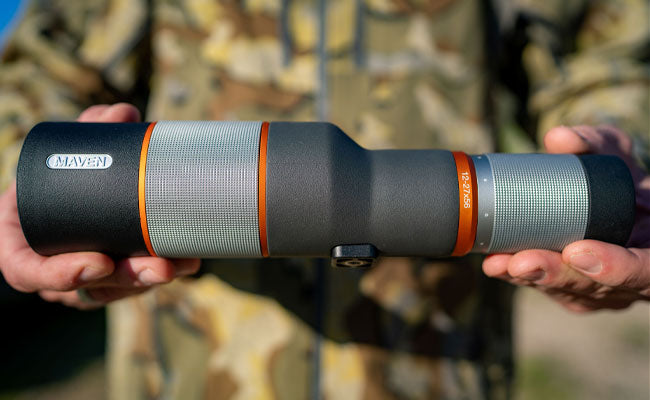
- 15x56 and 18x56: tripod-only, effectively a spotting scope you look through with both eyes. Superb for long alpine glassing sessions. Maven's B.5 and C.4.
If you're buying one pair to do everything, it's a 42mm. The rest are additions, not replacements.
Our recommendation
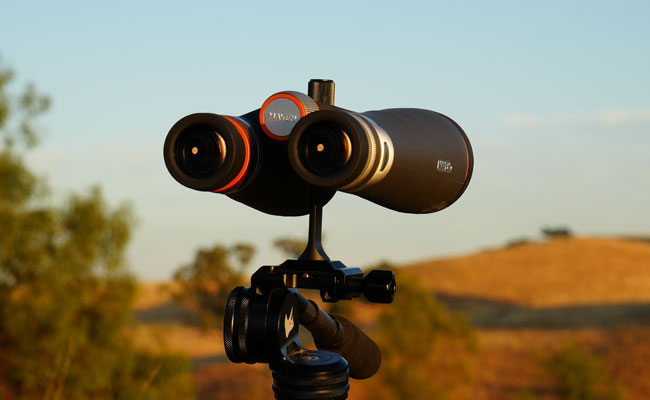
Both magnifications of the Maven B1.2 are the same binocular otherwise: the same glass, the same coatings, the same 760g body, the same unconditional lifetime warranty.
- Maven B1.2 10x42, $2,059 AUD. The one most of our customers buy. Open country, alpine glassing, tripod work.
- Maven B1.2 8x42, $1,999 AUD. A 140m field of view at 1,000m, brighter at last light. Timber, scrub, handheld hunting.
Direct from Maven, through us. No huge margins, no surprise import fees.
Still not sure? Call Josh on 0404 372 653. Describing the country you hunt takes two minutes and gets you a better answer than any comparison table.