Article: Why Do Hunters Use a Tripod, and Which One Should You Get?
Why Do Hunters Use a Tripod, and Which One Should You Get?
The short answer
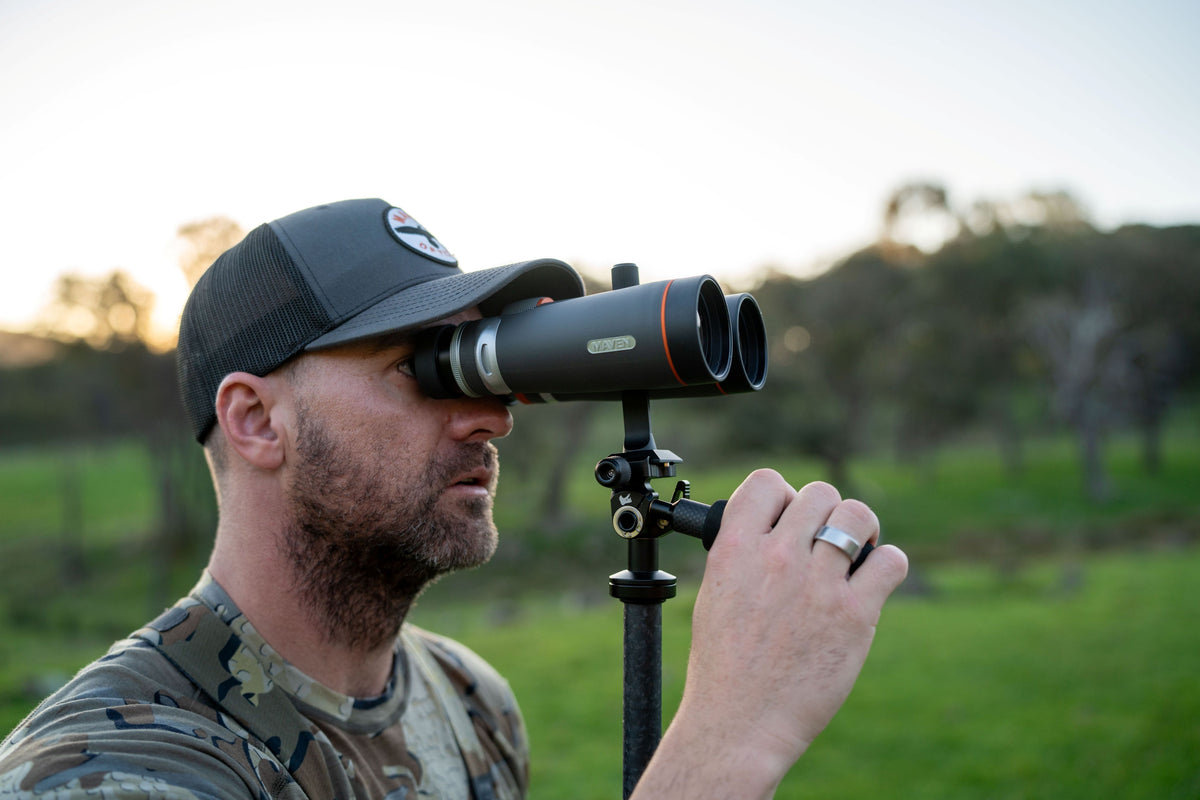
A tripod does two things handheld glassing can't: it removes hand shake, and it lets you glass for as long as the country needs rather than as long as your arms last.
The result is that hunters routinely find animals in country they'd already glassed and written off. Not because the binoculars changed, but because a steady image reveals detail a shaking one hides.
The problem with handheld glassing
Hold binoculars to your eyes and your hands are always moving. Heartbeat, breathing, muscle tremor. At 8x that movement is magnified eight times. At 10x, ten times. At 15x it is genuinely difficult to hold a usable image at all.
Hand shake starts becoming a real limitation from about 7x upward, and by 10x it's costing you detail whether you notice it or not. A bedded animal in shadow, an ear flick at 800m, an antler tip breaking a skyline: these are exactly the signals a moving image erases.
Then there's fatigue. Holding binoculars up is tiring within a couple of minutes. Most hunters glassing handheld do it in short bursts, drop their arms, scan somewhere else. Effective glassing is the opposite: slow, methodical, working a grid across a face for twenty or thirty minutes at a time. That's a physical impossibility handheld and effortless on a tripod.
What actually changes in the field
The common experience, and it's near universal among hunters who make the switch: you glass a face handheld, see nothing, set up a tripod on the same face, and find animals within ten minutes.
They were always there. A steady image lets you distinguish an ear from a branch, or a bedded animal from a rock, at distances where a shaking image gives you only "something".
This is why serious glassers treat a tripod as core kit rather than an accessory. It multiplies the capability of binoculars you already own, usually for less than the cost of upgrading them.
What to look for in a hunting tripod
Hunting tripods and photography tripods are different tools. The photography market optimises for maximum stability at any weight. Hunters need stability they can carry up a mountain.
Weight. The single most important spec, because a tripod left at camp is worth nothing. Under 1.5kg for anything you'll carry all day. Carbon fibre earns its price here.
Packed length. It has to fit on or in your pack without snagging every branch. Look at packed length as seriously as weight.
Height range. Two numbers matter: full standing height for glassing over scrub, and how low it goes for prone or seated work behind cover. A tripod that only works standing is half a tripod.
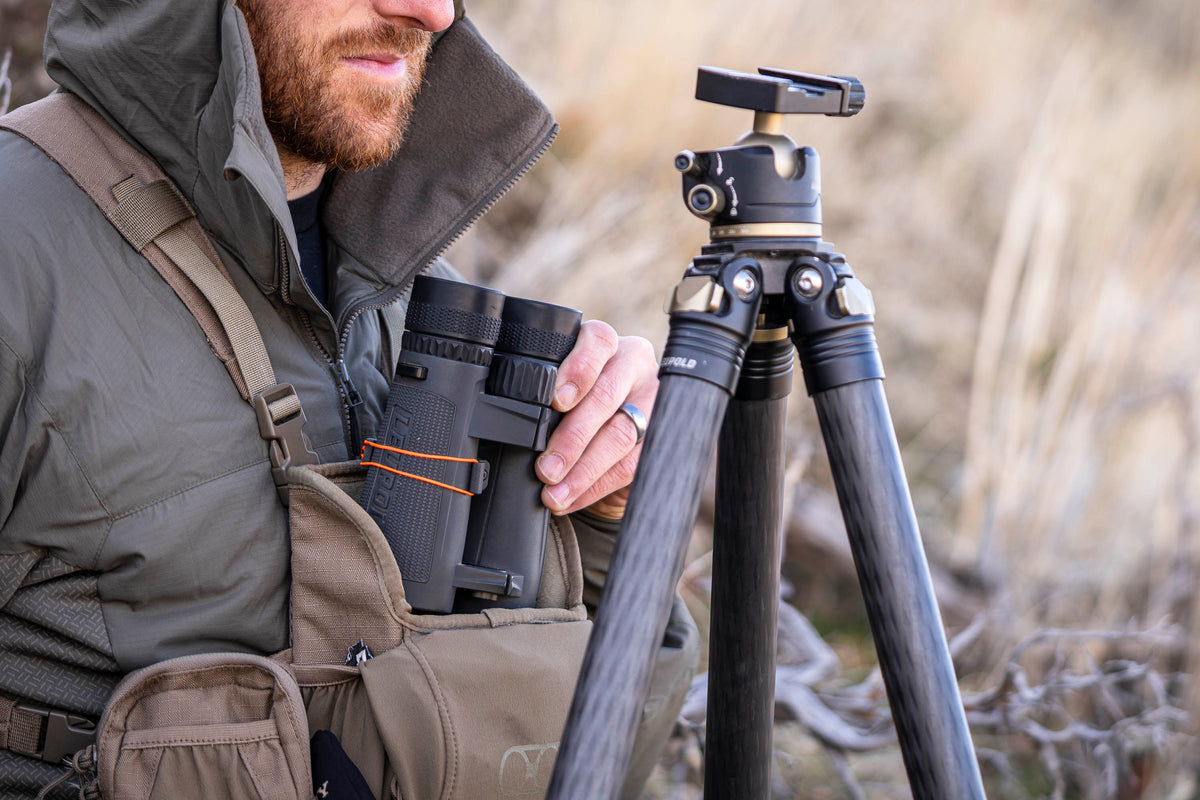
Head type. Pan heads track horizontally, which suits following animals across a face with binoculars. Ball heads give multi-directional precision, better for spotting scopes and shooting rests. If you're glassing binoculars, start with a pan head.
Leg locks. Twist locks are lighter and less snag-prone. Lever locks are faster with gloves on. Both work, and it's mostly preference, but locks positioned at the head rather than down the legs are quicker to deploy when an animal steps out.
What we carry
Tricer builds specifically for hunters who carry their tripod as far as their rifle.
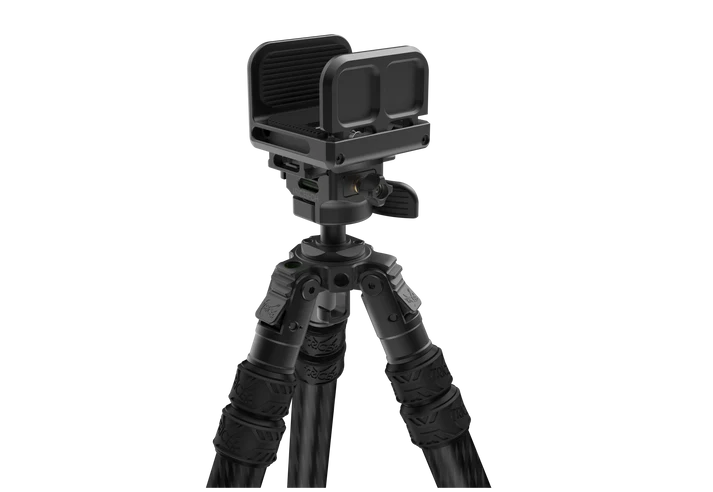
The Tricer-AD at $769 is the one most people end up on: carbon fibre, 964g, a 12kg load capacity, 163cm maximum height, and a folded length of 55cm. Its Tri-Tek removable centre column switches between long and short configurations with one cam lock lever.
For heads, the LP and BP pan heads suit binocular glassing. The DH and AK ball heads suit spotting scopes and shooting off the tripod, and the DZ and SP do both jobs.
Tricer gear bought new is backed by the Bombproof Lifetime Warranty against defects in materials and workmanship, for as long as the original buyer owns it. Register the product with Tricer to establish ownership.
How to actually use one
Most people set a tripod up wrong the first few times.
Get low. Sitting or kneeling is more stable than standing and keeps your outline off the skyline. Extend the top leg sections first and leave the thin bottom sections retracted where you can, they're the least stable part.
Set the height to your eyes, not the other way around. If you're leaning down into the eyepieces you'll last ten minutes. Adjust until you can sit upright with your neck neutral.
Plant the legs deliberately. Two legs downhill, one uphill on a slope. Push the feet into soil or hook them behind rock. Wind moves an underweighted tripod more than people expect.
Glass in a grid, slowly. This is the actual technique. Work systematically across the face in overlapping bands, left to right, then drop and come back. Cover a section for far longer than feels necessary. Most animals are found by movement inside a patch you've already looked at twice.
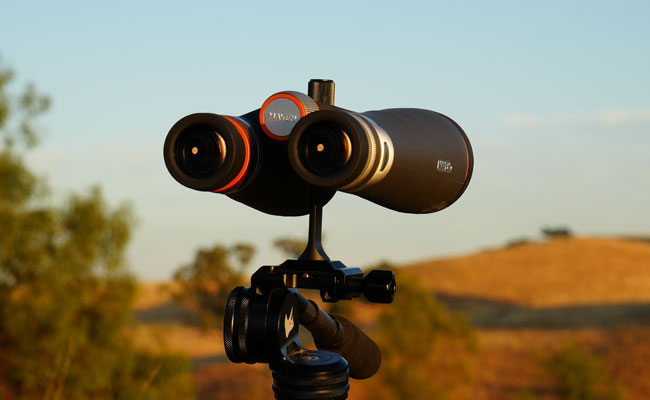
Use a bino adapter. Clamping binoculars properly to the head beats holding them against it. It's a small part that makes the whole system work as intended.
Is it worth it?
If you hunt open or alpine country and glass for more than twenty minutes at a stretch, a tripod will do more for your success rate than upgrading your binoculars.
If you hunt thick timber at close range, walking and stopping, it's much less useful and the weight is harder to justify.
Not sure which setup suits your hunting? Call Josh on 0404 372 653, he'll talk through what your country actually needs.