Do You Need a Rangefinder for Hunting?
The short answer
Past 200m, yes, without much argument. Inside 200m, it's genuinely debatable and plenty of good hunters manage without one.
The reason isn't accuracy for its own sake. It's that range estimation errors grow faster than most shooters realise, and past 300m an honest mistake becomes an animal that's wounded rather than killed.
Why estimating distance fails
Humans judge distance using reference objects and terrain. Take those away and the estimate collapses.
Across a valley, uphill, downhill, over water, across open ground with nothing familiar in the frame, experienced hunters routinely misjudge by 50 to 100m. Not beginners. Experienced hunters. It's a well-documented limitation of visual perception, not a skill problem you can train away entirely.
Two conditions make it reliably worse:
Uphill and downhill shots. Slope distance is longer than horizontal distance, and gravity only acts on the horizontal component. A 400m shot at a steep angle behaves ballistically like a shorter shot. Get this wrong and you shoot high. This is why angle compensation matters.
Open country with no scale reference. Western plains, alpine faces, tussock. Nothing in the frame to size against.
What the error actually costs
Take a common flat-shooting hunting cartridge zeroed at 200m. At 300m you're dropping perhaps 20cm. At 400m, closer to 60cm. At 500m, more than a metre.
Now add a 50m estimation error at 400m. You're aiming for the vitals and hitting 20 to 25cm off. On a red deer that's the difference between lungs and a gut shot or a broken leg.
That's the real argument. Not tighter groups. Fewer wounded animals.
When you genuinely don't need one
Timber and scrub hunting under 150m. You have reference points everywhere, ranges are short, and drop is negligible. Sambar hunters in thick Victorian country often never use one.
Stand or hide hunting at known distances. Range your landmarks once, note them, done. A rangefinder is useful for setting up, then it lives in the pack.
Bowhunting under 30m. Worth having, but the margin for estimation error at that range is far more forgiving.
What to look for
Maximum range on game, not on reflective targets. Manufacturers quote range against highly reflective surfaces. Real performance on a deer's flank in flat light is often half the headline number. A unit quoting 1,000m might reliably range an animal at 500m, which is still more than enough for ethical hunting distances.
Angle compensation. Sometimes called angle-modified range or true ballistic range. If you hunt anything other than flat country, this is the feature that matters most.
Speed and consistency. A unit that takes three attempts to lock onto an animal is a unit you'll stop using. Consistency beats headline range.
Display readability. Black displays disappear against dark timber. Red or illuminated displays stay readable at last light, which is exactly when you need a reading.
Size. The best rangefinder is the one in your pocket. A compact unit you carry always beats a superior one left in the truck.
What you get at each price level
Rangefinder pricing bands, in AUD, and what the money actually buys. Specific model pricing is on the product pages rather than here, since it moves.
Around $300. Basic ranging to perhaps 600m on reflective targets, considerably less on an animal. Usually no angle compensation. Fine for a bowhunter or a timber hunter who wants a sanity check on a known distance. Not enough for open country.
Around $500. The sweet spot for most hunters. Reliable ranging on game to 500m or beyond, angle compensation included, faster and more consistent lock-on. This is where a rangefinder stops being a novelty and starts being something you use on every hunt.
$700 and up. Longer usable range on game, better glass so the unit is genuinely pleasant to look through, ballistic solutions on the higher-end models, and build quality that survives being dropped on rock. Worth it if you regularly shoot past 400m or hunt in poor light.
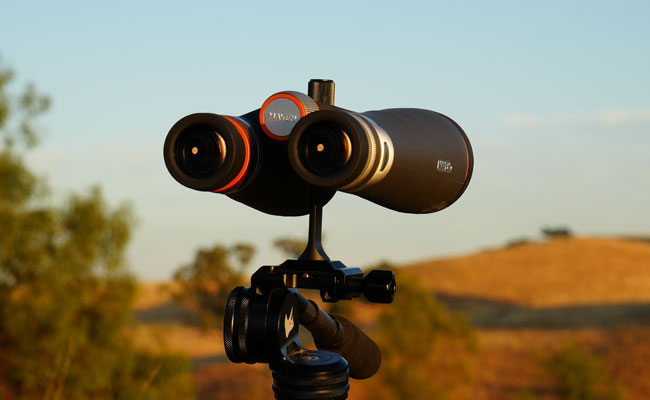
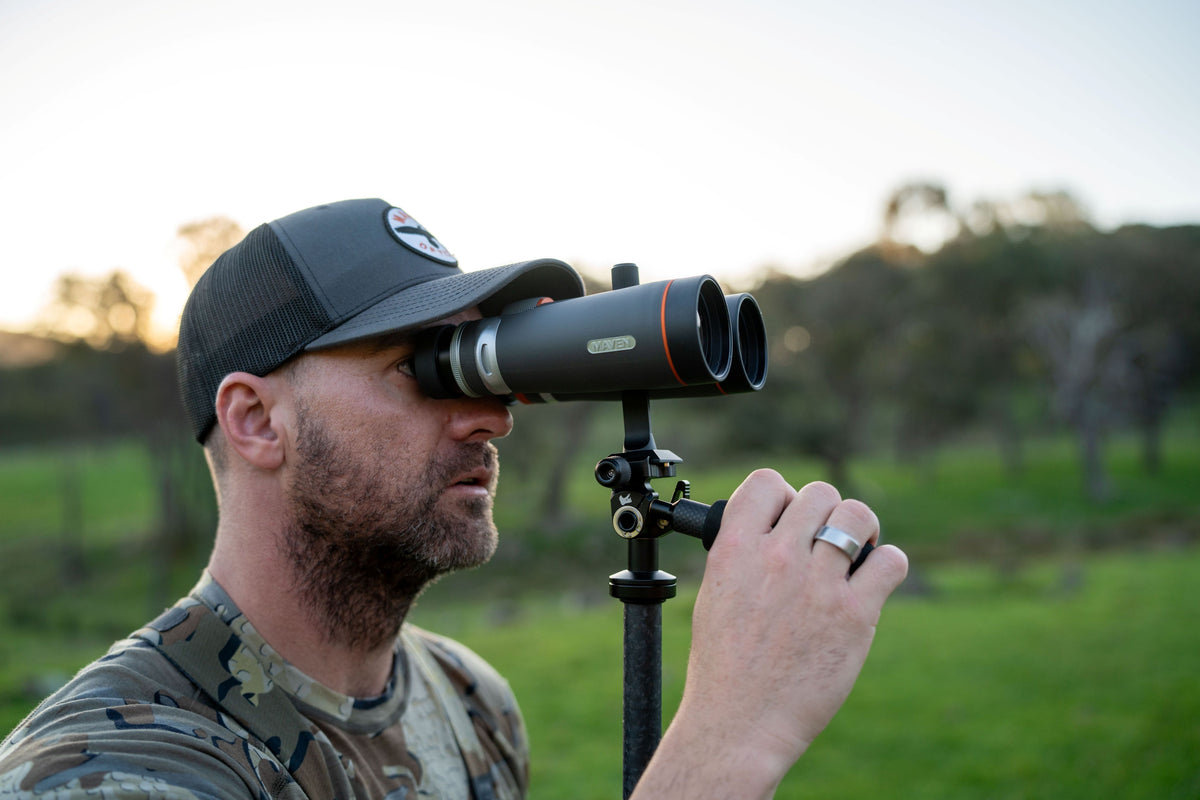
Rangefinding binoculars. A separate category, and expensive, but they solve the real problem of carrying two instruments and swapping between them at the moment an animal appears. If you already know you want premium binoculars and a good rangefinder, pricing the combined unit against buying both separately is worth doing.
What we carry
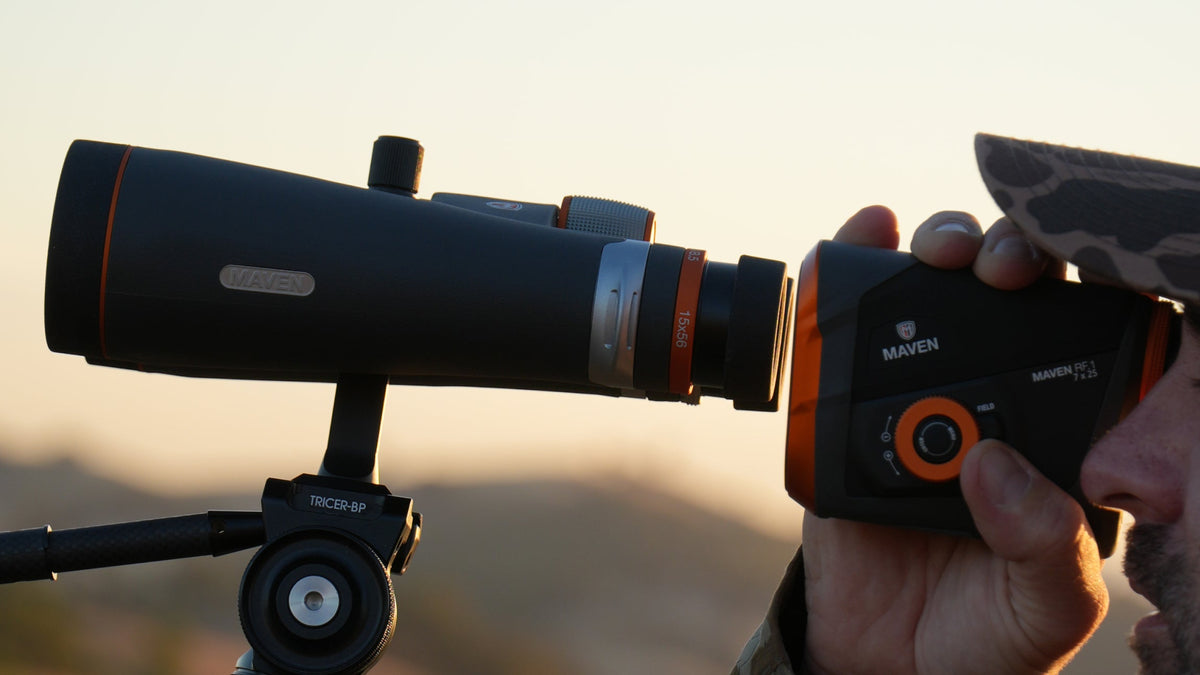
The Maven rangefinders are built on the same glass quality as the binoculars rather than as an afterthought. The RF.1 and RF1.Z suit rifle hunters needing accurate data before a shot. The CRF.1 is the compact option for hunters counting weight.
All of them come direct from Maven through us as the exclusive Australia and New Zealand distributor, with the same unconditional lifetime warranty that covers every piece of glass they make.
The honest summary
If your longest realistic shot is 150m in timber, spend the money on better binoculars instead. You'll use them more.
If you hunt open or alpine country, or you're regularly taking shots past 250m, a rangefinder is one of the highest-value items you can add to a kit, and it's an ethics purchase before it's a performance one.
Not sure which side of that line you're on? Call Josh on 0404 372 653.